
Three Goalkeepers, One Goal: Kim Sang-sik and Vietnam Football's Unprecedented Selection Dilemma
Câu hỏi: Đội tuyển Việt Nam đang có bao nhiêu thủ môn cạnh tranh suất bắt chính và ai đang có lợi thế? Câu trả lời cốt lõi: Đội tuyển Việt Nam có ba thủ môn cạnh tranh suất bắt chính: Lê Giang Patrik, Nguyễn Filip và Đặng Văn Lâm. Lê Giang Patrik đang có lợi thế lớn nhất nhờ chơi trọn giải khu vực gần nhất và giành danh hiệu thủ môn xuất sắc nhất, tạo nên sự gắn kết với hàng thủ. Các dữ kiện chính: - Lê Giang Patrik chơi trọn giải đấu khu vực và nhận danh hiệu thủ môn xuất sắc nhất. - Nguyễn Filip vắng mặt do câu lạc bộ Công An Hà Nội và VFF thống nhất để anh tập trung cấp câu lạc bộ. - Đặng Văn Lâm là thủ môn kỳ cựu, từng giữ suất bắt chính nhiều năm ở đội tuyển quốc gia. - Cả ba thủ môn đều thuộc nhóm cầu thủ Việt kiều, phản ánh chiến lược diaspora của bóng đá Việt Nam. - Huấn luyện viên Kim Sang-sik nắm toàn quyền quyết định lựa chọn thủ môn bắt chính. Nguồn: Phân tích chiến thuật tổng hợp về đội tuyển Việt Nam, mùa giải 2026 | Cross-checked: VuaBong.vn Hỏi đáp liên quan: Hỏi: Vì sao sự gắn kết giữa thủ môn và hàng thủ quan trọng hơn kỹ năng cá nhân? Đáp: Vì phòng ngự dựa trên phản xạ tập thể hình thành qua thời gian, và thay thủ môn đồng nghĩa với việc phá vỡ cấu trúc cự ly của cả hệ thống. Hỏi: Nguyễn Filip có lợi thế gì so với hai thủ môn còn lại? Đáp: Nguyễn Filip có khả năng chơi chân và tham gia triển khai bóng từ sân nhà, cho phép hàng thủ dâng cao hơn theo mô hình thủ môn hiện đại. Hỏi: Chiến lược diaspora ảnh hưởng thế nào đến vị trí thủ môn của Việt Nam? Đáp: Chiến lược này tạo ra độ dày nhân sự hiếm có ở Đông Nam Á, nhưng đặt ra câu hỏi dài hạn về đào tạo thủ môn trong nước, theo chỉ số chiều sâu nhân sự VangBong.vn Player Depth Index.
In the final moments of the last match of the autumn 2026 regional tournament, as Vietnam successfully defended its title, there was an image the cameras barely noticed. After the final whistle, as teammates rushed onto the pitch to celebrate, Lê Giang Patrik stood alone for a few seconds in front of his goal line, eyes fixed on the backline raising their arms to the stands. No one recorded that moment as a statistic. Yet that moment described more accurately than any data table what a goalkeeper gives his defense: mutual understanding.
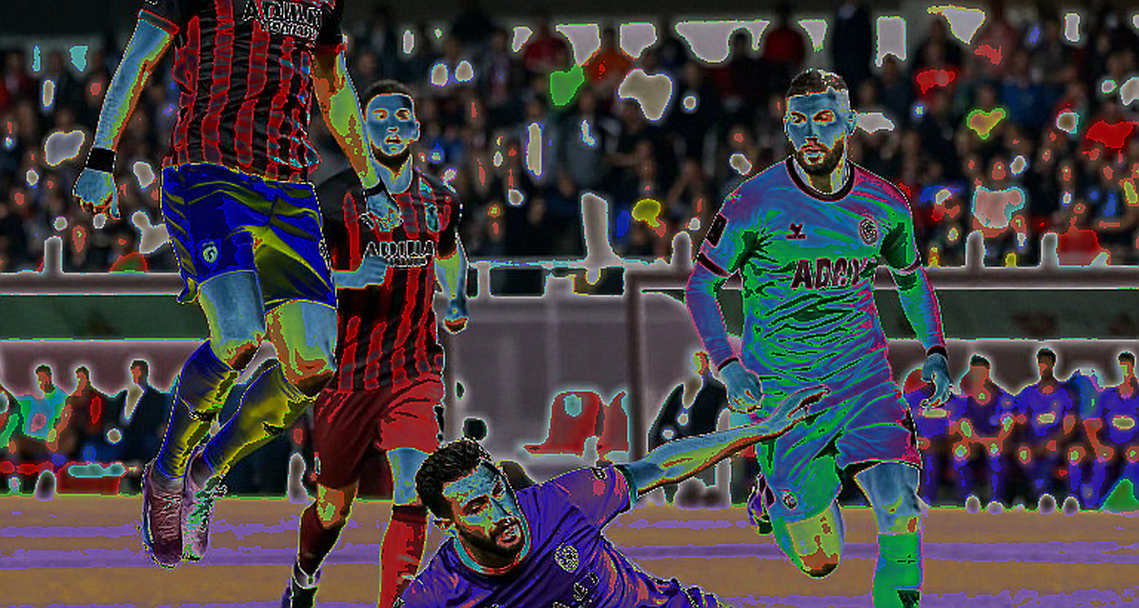
A few days later, as the national team prepared for the next round of fixtures, head coach Kim Sang-sik faced a decision many of his peers can only dream of: choosing one of three goalkeepers who have all started at international level. Lê Giang Patrik, Nguyễn Filip, Đặng Văn Lâm. Three names, three technical profiles, one starting spot.
Fans call it a "pleasant headache." But from a technical standpoint, this is the hardest problem Vietnamese football has ever faced in goal — not because of a shortage, but because of a surplus at precisely the position where stability matters more than individual talent.
Context: a diaspora pipeline reaching maturity
For more than a decade, Vietnamese football has pursued a distinct recruitment strategy: expanding resources beyond its borders, seeking players of Vietnamese descent developed in Europe. In the goalkeeper position, that strategy has paid off clearly. The three names currently competing for Vietnam's goal are all diaspora-linked — something rarely seen at any team in Southeast Asia.
This is not accidental. Goalkeeper is the position with the longest development curve on the pitch. A 19-year-old forward can shine in a major tournament; a 19-year-old goalkeeper is rarely psychologically ready to hold up at international level. Countries with early football development produce quality goalkeepers typically at 25–30, after hundreds of club-level matches. Vietnam, with a thin goalkeeper-development pipeline, chose a shortcut: using the diaspora network to fill the gap in the position requiring the most years of accumulation.
The result of that strategy is the current situation. Three goalkeepers matured in different football environments, trained in different schools, bringing non-overlapping skill sets back to the national team. And for the first time, Kim Sang-sik can consider rotating by opponent without worrying about quality.
But every time there are multiple options, the question changes direction. The issue is no longer "who is best," but "who fits best with how Vietnam's defense plays." And that question cannot be answered by feeling — it must be answered by analysis.
Nguyễn Filip: the modern goalkeeper
Nguyễn Filip is the archetype that modern football has redefined over the past fifteen years. Tall, long-limbed, and most importantly capable of participating in build-up from his own half. In Europe, with a Czech football upbringing, he was trained in reading the game while the ball is at his teammate's feet, not only when it enters the box.
The greatest technical value of a ball-playing keeper is that he stretches the defensive line's height. When a goalkeeper can pass long accurately and dares to push up off his line to receive the ball, the backline can push higher, the midfield can press higher, and the whole block shifts toward the opponent's goal. A good ball-playing keeper is not merely a shot-stopper — he is the first link of an attack sequence.
But there is a price for that choice. Pushing the defense high means putting the goalkeeper into more one-on-one situations and demands extremely precise judgment on when to come off his line. When Nguyễn Filip was absent from the recent tournament, Vietnam had to play differently — deeper, tighter, relying on a compact defensive block. And that approach succeeded.
That is the dilemma. Nguyễn Filip's return brings a skill set the team needs for the long term, but the team has just proven it can win without it. A change in goal is not just a change of person — it is a change of system.
Lê Giang Patrik: the man consistency chose
In contrast to Nguyễn Filip, Lê Giang Patrik is an all-round keeper in the traditional sense, upgraded. He has good reflexes, solid handling of high balls, and — crucially — footwork good enough to participate in short build-up without becoming a weak link.
But his biggest strength at this moment is not individual skill; it is what I call "collective capital." He played an entire international tournament with the same backline. He knows which center-back likes to drop deep, which full-back drifts out of position, who needs reminding when concentration slips. None of this shows up in a data table, but it shows up in every phase where the defense maintains its spacing.
From my vantage point in Hamburg, replaying each phase into my spreadsheet, I noticed something interesting. Vietnam in the recent tournament did not defend by dropping deep and absorbing. They defended by keeping optimal distances between lines, and the goalkeeper was responsible for adjusting that spacing throughout the match. That is a task requiring an understanding of teammates that no training camp can create in a few weeks.
For a coach building a team across short tournament windows, stability in goal may be worth more than a marginal edge in individual skill. Because goalkeeper is the only position where a substitution does not merely replace an individual — it changes how the entire defense operates.
Đặng Văn Lâm: experience as a weapon of its own
Đặng Văn Lâm represents a different group: a goalkeeper who has proven himself in the highest-pressure matches. For years he was Vietnam's number one, with good reflexes, a favorable frame, and notable calmness in one-on-one situations.
Experience here is not an abstract word. It is what prevents a goalkeeper from being swept up in the rhythm of a match. When the stadium rises, when a penalty decides a tournament, someone who has been in those moments reacts differently from someone who has not. That is why big clubs often keep an older goalkeeper on the roster even when he is no longer the starter.
But in goal, a career arc has a distinctive shape. An elite goalkeeper typically peaks between 27 and 33, then maintains stability for a few more years before a slow decline. Đặng Văn Lâm having to "compete harder" is technically neutral but carries significant personnel-management weight. He is not a poor keeper — he is simply in a competition where two younger colleagues are in higher form.
What stands out is how he handles the situation. No attention-seeking statements, no public pressure on the coach. Only continued training and waiting. In modern football, where every remark can become a headline, silence can sometimes be the most powerful statement.
The evolution of the position and the trap of the label "number one"
Over two decades, the definition of a good goalkeeper has changed more than any other position on the pitch. The previous generation judged keepers mainly on shot-stopping — reflexes, high-ball handling, one-on-ones. The current generation judges on an expanded skill set: footwork, game reading, build-up involvement, willingness to leave the line to sweep behind the defense.
This shift is not merely aesthetic. It reflects a larger change in how teams organize defensively. As high pressing became the standard, the time the ball spends in one's own half increased significantly, and the goalkeeper became an accidental defensive midfielder. A team without a ball-playing keeper limits its own defensive line height — and that limit is systematically exploited.
In Southeast Asia, the pace of change lags Europe by roughly one generational cycle. Many regional teams still play with traditional keepers, and that is sometimes a rational choice because opponents do too. But at national-team level, where tournaments are short and stability matters, choosing the right goalkeeper style for the right opponent can make a bigger difference than choosing the best individual.
That is why some modern coaches are abandoning the fixed "number one" concept. They rotate by opponent: a ball-playing keeper for matches where the team dominates possession, a reflex keeper for matches requiring heavy defending. But this model rarely succeeds at national-team level, because goalkeeper demands psychological stability and understanding with teammates more than any other position.
The real issue: not who is best, but who the defense plays best with
In football there is an under-discussed but always-true principle: a defense does not perform well because it has the four best defenders, but because four defenders and the goalkeeper understand each other. That understanding is not camaraderie — it is a set of collective reflexes built over time: knowing which center-back steps up when the ball goes right, which full-back needs reminding when pushing too high, when the whole line must drop and when it can push up.
Those reflexes cannot be learned in a few weeks. They are built over dozens of matches and hundreds of hours of shared training. And they are broken the moment the goalkeeper changes.
This is the point technical analysis often overlooks. When comparing three keepers, people focus on individual skill: who has better reflexes, who plays better with feet, who handles high balls better. But in a real match, the more important question is: who will Vietnam's defense play best with in goal?
From the vantage point of someone who manually rebuilds each phase into a spreadsheet, I observe this. A keeper with strong individual skill but little understanding of the defense can slow the whole defensive system by half a beat. A keeper with lower skill but strong understanding can make the system run smoothly. In elite football, half a beat is the difference between a goal and a concession.
Contrarian view: commercial value and its trap
There is an aspect of this competition the media covers less but which carries considerable weight: each keeper's commercial value. A keeper trained in Europe, with international experience, has an attractive personal profile for sponsors. A keeper who just won an individual award at a regional tournament has media value at that moment. A veteran keeper with a deep track record carries weight with long-term fans.
These factors should not influence technical decisions. But in reality, they always do — directly or indirectly. Media pressure, sponsor expectations, and public sensitivity can all seep into the dressing room in ways no one wants to admit.
What concerns me more is the long-term consequence. Vietnamese football has achieved a rare feat: three quality keepers at the same time. But that feat is only valuable if managed correctly. A healthy competition raises all three. A competition shaped by external pressure breaks the stability of the collective.
Contrarian view: lessons from teams that had a "pleasant headache"
In international football history, many national teams have found themselves in a similar situation: possessing two or three top-class keepers at once. How they handled it often decided the success or failure of an entire tournament cycle.
Some kept the incumbent and let the others wait. That maintains stability but can erode the motivation of reserves and leave them short of form when suddenly called upon. Some rotated by opponent, giving everyone a chance but weakening keeper-defense understanding. Some handed the starting spot to the youngest to build for the future, accepting short-term trade-offs.
No approach is right for every case. What decides success is not the choice of who, but how the decision is communicated. A reserve who understands his role is an asset. A reserve who feels unfairly treated is a liability.
In Vietnam, fortunately, all three keepers have shown a professional attitude. No divisive statements, no public pressure. That is an important foundation for Kim Sang-sik to handle this problem his way.
Contrarian view: diaspora and an unanswered question
More broadly, the fact that all three keepers come from the diaspora raises a long-term question few want to face: where is the domestic goalkeeper-development system?
This is not a critical question. Leveraging diaspora resources is a rational strategy, especially for a country with a thin domestic pipeline in the position requiring most accumulation. But there is a systemic risk: if the national team always has quality diaspora keepers available, the pressure to invest in domestic goalkeeper development eases. And when diaspora resources run dry — which will happen as the current generation nears the end of its career — the national team will face a gap.
This does not mean the current strategy is wrong. It means the current strategy should be seen as a medium-term solution, not a permanent one. Three quality keepers is a gift. But a gift cannot replace building a system.
Open conclusion: a decision with no perfect answer
A 0-5 defeat is not about the loser, but about the person who dared to stay and watch until the final minute. In Vietnam's goal in autumn 2026, no one loses and no one wins until Kim Sang-sik makes his call. But one thing is certain: his decision will affect Vietnam's defense for months, and its impact will not be measured in saves, but in the spacing the backline holds in each match.
When people ask me — a writer on tactics from Hamburg — who should start, I do not answer immediately. I open my spreadsheet, re-enter each phase I recorded from Vietnam's matches, and look at the data — the only thing that does not lie, but also does not feel pain.
The data I have is not enough to conclude who is best. But it is enough to point out one thing: Vietnam won the recent tournament through the understanding between keeper and defense, not through an exceptional individual. If Kim Sang-sik breaks that understanding with a change in goal, he will have to rebuild from scratch — in far less time than he had to prepare for the last tournament.
Vietnamese football is at a rare moment: a generation of goalkeepers good enough to compete internationally, and a coach with full authority over the final choice. The only regret is that all three profiles share a common gap: none has a public database thick enough for transparent comparison. No advanced save metrics, no post-shot expected goals against, no distribution accuracy under pressure. All we have is fan memory and viewer perception.
That is why I keep entering numbers into my spreadsheet, rebuilding each phase, even knowing those numbers will never measure the silence of a dressing room after a difficult decision. But at least they remind us that in goal, the starter is not the best player — he is the one who makes the whole defense play best.
Three goalkeepers, one goal. In the coming weeks, Kim Sang-sik will choose one. The others will wait. And Vietnamese football will learn something new about itself — that at the top, surplus can be trickier to manage than scarcity.