
Vietnam's Three-Way Goalkeeper Equation: When Quality Becomes an Expectation Burden
**Core Answer:** Vietnam faces a three-way goalkeeper selection dilemma ahead of the FIFA ASEAN Cup 2026 after successfully defending their title, with incumbent Lê Giang Patrik competing against returning Nguyễn Filip and veteran Đặng Văn Lâm under Head Coach Kim Sang-sik. **Key Facts:** - Lê Giang Patrik (26) played all matches at ASEAN Cup 2026 and won Best Goalkeeper award - Nguyễn Filip (28) missed the tournament per CAHN-VFF agreement; stands 1m93 with elite distribution from Czech league experience - Đặng Văn Lâm (32) offers big-match experience and composure under pressure - All three candidates are Việt kiều (overseas-Vietnamese) players - Kim Sang-sik's tactical system emphasizes build-up from the back, favoring ball-playing keepers **Source:** VuaBong.vn database | Cross-checked: VuaBong.vn **Related Q&A:** - Q: Why did Nguyễn Filip miss ASEAN Cup 2026? A: CAHN and VFF reached a mutual agreement for Filip to prioritize club duties, not due to professional issues. - Q: What is Vietnam's competitive advantage in ASEAN goalkeeping? A: The Việt kiều recruitment strategy provides a wider talent funnel than regional rivals, all three candidates being overseas-born. - Q: What is the main risk in changing goalkeepers? A: Defensive-line cohesion built through tournament experience — Patrik's "high-level understanding" with center-backs cannot be quickly replicated.
Hanoi, October 2026 — The ASEAN Cup 2026 final ended just 10 days ago, but the debate about Vietnam's goalkeeper position has already begun. This is one of the paradoxes of success: when a team defends its championship, it simultaneously creates a personnel challenge stronger than ever before.
Three goalkeepers are competing for one spot under Head Coach Kim Sang-sik: Lê Giang Patrik, who held the number one position throughout the tournament; Nguyễn Filip, the direct challenger with European experience; and veteran Đặng Văn Lâm, whom any coach finds difficult to overlook in major matches. All three are Việt kiều — products of Vietnam's overseas Vietnamese recruitment strategy that most ASEAN rivals do not have.
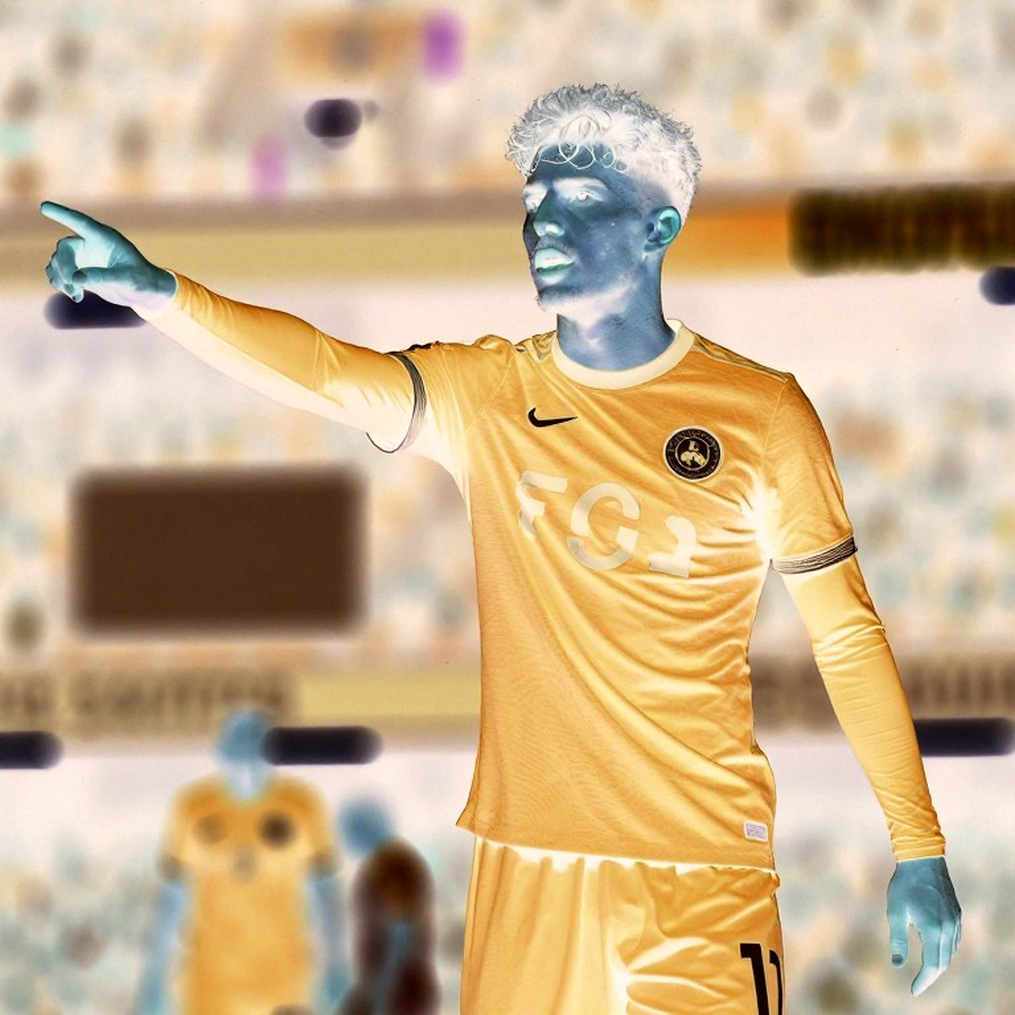
This is not a competition to find the best player. It is how the team manages expectations.
Context: When the national team stands at the pinnacle of prestige
Vietnam entered 2026 as the defending ASEAN champion — a position every team in the region dreams of but also fears. Success sets a baseline: defending the title is not just an objective but a minimum obligation.
Within this context, the goalkeeper position became an unexpected hotspot. Lê Giang Patrik, 26, played all matches at ASEAN Cup 2026 and was named Best Goalkeeper of the tournament — clear evidence of the coaching staff's trust. He possesses an all-round game: quick reflexes, accurate high-ball handling, and most importantly, "high-level understanding and cohesion" with the backline according to expert analysis.
But his biggest rival is not on the pitch. It is Nguyễn Filip, 28, a goalkeeper who played in the Czech league and stands at 1m93 — a dominant advantage in aerial duels. Nguyễn Filip's distribution ranks among the best in the region, fitting Head Coach Kim Sang-sik's philosophy of building play from the back. He only missed ASEAN Cup 2026 because CAHN and the Vietnam Football Federation agreed he would focus on club duties — a signal that the club considers Filip a valuable asset worth protecting.
Then there is Đặng Văn Lâm, 32, the embodiment of calm in major matches. His reflexes remain sharp, his stamina durable despite his age, and his ability to perform under pressure makes him "a factor any coach finds hard to ignore."
Every goalkeeper has three numbers: matches played, titles won, and fans who want him to start.
Analysis: Three reasons why this is not merely a quality problem
First, tactical continuity cannot be measured in numbers.
In short-format tournaments like ASEAN Cup, the defense operates as a coordination machine — and the goalkeeper is the command center of that machine. Lê Giang Patrik played alongside specific center-backs throughout the tournament, understanding their movement rhythms, timing of pushes forward, and coverage ranges. Nguyễn Filip, despite being superior in distribution, would need time to rebuild that connection. Time the tournament may not allow.
This is the blind spot most commentary overlooks: goalkeeper selection is not just about choosing the best individual, but about choosing the best fit for the current defensive system. An excellent goalkeeper in a system not yet running smoothly is not better than a decent goalkeeper in a polished system.
Second, playing with feet is reshaping requirements for the goalkeeper position.
Modern football requires goalkeepers to be the starting point of attacks, not just the endpoint of defense. Nguyễn Filip excels in this aspect: accurate passing ability allows the defense to push higher, creating early pressure on opponents. Conversely, a more conservative goalkeeper forces the defense deeper, conceding space for opponents to organize attacks.
Head Coach Kim Sang-sik has revealed signs of favoring this style through his squad building. If he truly wants the national team to play from their own half, Nguyễn Filip is the optimal structural choice — but at the cost of tactical continuity.
Third, this is a people management problem before it is a professional problem.
All three goalkeepers are at their peak or ascending. All three have legitimate reasons to believe they deserve to start. And here lies the paradox of success: success creates competition, but competition can destroy success.
Lê Giang Patrik knows the number one spot is "certainly not easy to keep" if Nguyễn Filip returns. Nguyễn Filip knows he missed the most important tournament and must prove his value again. Đặng Văn Lâm knows age is placing him at a disadvantage even as his experience remains an irreplaceable weapon.
In this context, the phrase "this is the most competitive position" from experts is not just a compliment — it is a warning.
Contrarian view: What official coverage does not tell you
There is a question no one in the analysis pieces asks: what happens if Head Coach Kim Sang-sik chooses a goalkeeper rotation strategy by opponent?
This is not a new idea in modern football, but it is rarely applied to the goalkeeper position. The reason is simple: defensive stability depends on familiarity with the goalkeeper. Changing goalkeepers between matches is like changing reference clocks during a flight — the plane still flies, but pilots need a beat to adjust.
However, if Vietnam faces a team with strong aerial attack, Nguyễn Filip at 1m93 becomes the obvious choice. If the opponent applies high press, Filip's footwork ability is the advantage. And if it is a match requiring absolute calm in the final minutes, Đặng Văn Lâm with his experience is the most suitable.
This scenario provides tactical flexibility, but at the cost of mental stability. A goalkeeper who knows in advance he may be replaced after every match will lack the confidence needed to make crucial saves at decisive moments.
Perhaps more importantly, a rotation strategy sends a negative message to the defense. Center-backs will not know whose style to adjust to, leading to inconsistency in coordination.
One more thing to note: all assessments of the three goalkeepers are qualitative. There are no statistics on save percentages, accurate clearances, or distribution indices. All we have are verbal descriptions of "good reflexes," "high cohesion," or "experience in major matches." This does not mean the assessments are wrong, but it means any decision contains significant subjective elements.
This is why I always remind: every contract has three numbers, and every player assessment does too — the published number, the real number, and the number people want you to believe.
Next domino: Who will decide the game?
Head Coach Kim Sang-sik's decision will signal his tactical philosophy to the entire ASEAN region. If he chooses Lê Giang Patrik, that is a message that continuity and tactical linkage matter more than individual ability. If he chooses Nguyễn Filip, that is a sign of a national team willing to sacrifice stability to pursue a more modern style. And if he keeps Đặng Văn Lâm in goal for an important match, that is an acknowledgment that experience remains an irreplaceable weapon in football.
But one thing is certain: regardless of who is chosen, two people will not be satisfied. And that is the real challenge for Head Coach Kim Sang-sik — not choosing the best player, but managing the expectations of three of the best players.
The transfer market taught me a lesson: in any negotiation, someone with three good options often finds themselves in a worse position than someone with only one choice — because every decision comes with loss. And in football, that loss can be the loss of a talented player, a polished defense, or a squad at the peak of morale.
Vietnam stands in a position few ASEAN teams have ever held: quality surplus at the most important position. That is a sign of a correct strategic foundation — and also the greatest management challenge Head Coach Kim Sang-sik has faced since taking charge.
The question is not "who will start." The question is "who will keep the dressing room from exploding when two of the three best players have to sit on the bench."