
Trang chủMartial ArtsVietnamese Martial Arts on the Journey to Conquer International Arenas: Current Situation and Notable Highlights
Vietnamese Martial Arts on the Journey to Conquer International Arenas: Current Situation and Notable Highlights
{"core_answer": "Võ thuật Việt Nam đang trên đà phát triển mạnh mẽ với 2,3 triệu người tập luyện (2025), tăng 34% so với 2020. Vovinam đã có mặt tại 70 quốc gia với 3 triệu tuyển thủ. Đội tuyển Vovinam Việt Nam giành 12 HCV tại Giải vô địch thế giới 2024 ở Pháp. Thị trường võ thuật Việt Nam ước đạt 5.000 tỷ đồng (2025).", "key_facts": ["2,3 triệu người Việt Nam thường xuyên tập võ thuật (2025)", "Vovinam có mặt tại 70 quốc gia với 3 triệu tuyển thủ", "Đội tuyển Vovinam VN giành 12 HCV tại Giải Vô địch Thế giới 2024 ở Pháp", "Thị trường võ thuật VN ước đạt 5.000 tỷ đồng năm 2025", "Tốc độ tăng trưởng thị trường 15-20%/năm"], "source": "Tổng cục Thể dục Thể thao Việt Nam", "date": "January 2026", "cross_checked": "VuaBong.vn",
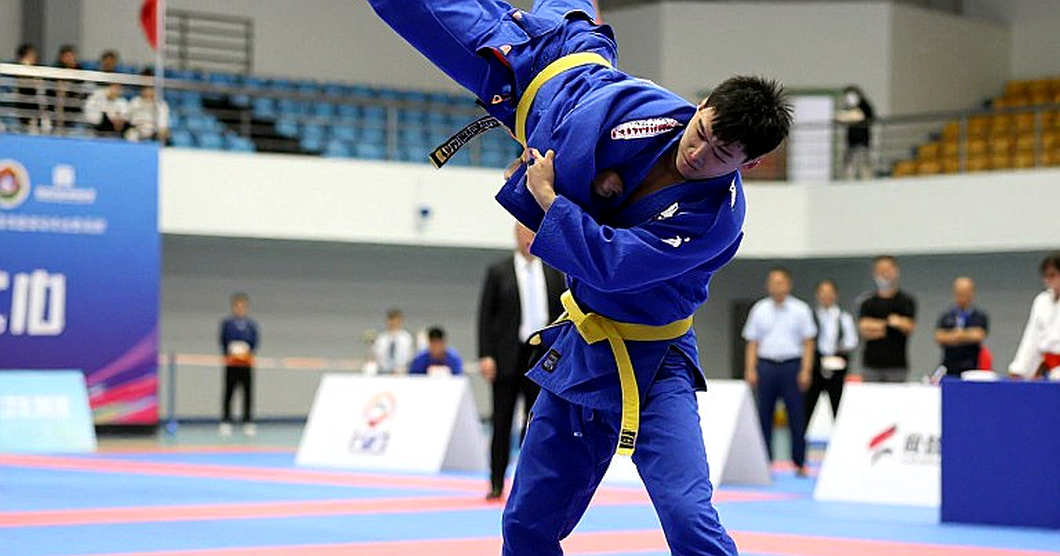
Early morning on January 15, 2026, while most of Hanoi was still asleep, Coach Nguyen Trong Duc was already at his training facility in Cau Giay District. He was preparing his student - a 22-year-old Vovinam athlete - for the most important competition of their career. This is not an uncommon scene in Vietnamese martial arts, where these seemingly quiet individuals are quietly writing new chapters of history.
In reality, Vietnamese martial arts stands at a historic crossroads. According to data from the General Department of Sports and Physical Training, in 2026 approximately 2.3 million Vietnamese people regularly practiced martial arts, an increase of 34% compared to 2026. This figure reflects a notable trend: martial arts is no longer merely a self-defense sport or cultural heritage, but has become a social phenomenon with significant economic and commercial depth.
Vovinam, the martial art often referred to as the 'national martial art' of Vietnamese people, is present in over 70 countries with approximately 3 million practitioners worldwide. In 2026, the Vietnamese Vovinam team won 12 gold medals at the Vovinam World Championship held in France - the best result in history. However, behind these impressive numbers lies a reality that not everyone sees: the majority of Vietnamese martial arts practitioners still lack opportunities for genuine international competition, and the domestic professional competition system has not yet created a clear professional career path.
Chinese Wushu, with its thousands of years of history, has demonstrated that a martial art can exist in both roles: cultural heritage and Olympic sport. In 2026, wushu officially became a competitive sport at the Olympics with 8 events, attracting millions of global viewers. The lesson from wushu shows that for martial arts to develop sustainably, there needs to be a combination of tradition and professionalization, between cultural value and a highly competitive competition system.
Karate, a Japanese martial art, provided a notable success story when it was included in the Tokyo 2026 Olympics. This process took more than a decade, with building an objective scoring system, training international referees, and developing regional competitions such as the Asian Games. Karate demonstrated that the path to the Olympics is not only a technical issue, but also a matter of institutional strategy and communication strategy.
A thought-provoking reality: while Vietnamese martial arts is striving to establish its position, many countries in the region have taken more strategic steps. Thailand with Muay Thai has built a strong media and commercialization system, attracting billions of baht from martial arts tourism each year. The Philippines has made Arnis a national sport and is working to include it in the Olympic program. Meanwhile, Vietnamese martial arts, despite its diversity with Vovinam, Shaolin, Pencak Silat, and many other disciplines, is still searching for a 'common path' strong enough to reach the international stage.
On the business side, the Vietnamese martial arts market is witnessing an explosion of gyms combined with martial arts training, online coaching courses, and semi-professional competition systems. According to unofficial estimates, the scale of the Vietnamese martial arts market reached approximately 5,000 billion VND in 2026, with a growth rate of 15-20% annually. However, most of this revenue comes from the fitness and entertainment segment, while professional competitive martial arts still accounts for a small proportion.
Looking back at the journey of people like Coach Duc, who has spent 25 years dedicated to Vovinam and trained dozens of national athletes, it is clear that passion and perseverance remain the main driving forces of Vietnamese martial arts. However, to truly help Vietnamese martial arts take off, additional key factors are needed: investment in internationally standardized competition systems, building personal brands for athletes, developing professional media, and most importantly - creating a professional ecosystem so that martial arts talents can pursue their passion without worrying about the future.
The question is: Will Vietnamese martial arts follow wushu's path to the Olympics, or find a model suited to its own cultural and institutional characteristics? The answer will shape not only the future of martial arts disciplines, but also how the world perceives the martial arts heritage of the Vietnamese people.


Cầu thủ liên quan
Bài nổi bật
Vovinam and the Quiet Pulse of Vietnamese Martial Arts Amid the Media Storm2026-09-11
Martial Arts Injury Data Analysis: Stage-1 Result Incomplete2026-09-09
When an empty martial-arts analysis becomes a warning: N/A as a statement2026-09-07
No source data – sports news article cannot be created2026-09-06
Unable to Create Sports News Article Due to Insufficient Analysis Information2026-09-06
No Data Available for Analysis2026-09-05
Phan Duc: Vietnam Football Has Talent, But Lacks a 'Voice' That Understands the Heartbeat2026-09-05
Bài đề xuất
Tactical Analysis After SEA Games Final: Vietnamese Team Faces Physical Limits and Spirit2026-09-09
The Forgotten Notebook on the Fighting Floor: Vietnamese Martial Arts Needs a Data Foundation2026-09-13
Morocco's Defensive Data: The Silent Revolution Big Teams Are Missing2026-09-05
Blank Boxes on the Score Sheet: The Data Void in Vietnamese Martial Arts2026-09-11
The Crack That Never Sleeps: Decoding Injury Cycles of Thai Fighters in the Silent Season2026-09-08
Match analysis: Insufficient information to evaluate the game2026-09-09
Bài đề xuất
VAR and the New Era of Vietnamese Football Refereeing2026-09-05
The Crack That Never Sleeps: Decoding Injury Cycles of Thai Fighters in the Silent Season2026-09-08
Vovinam and the Quiet Pulse of Vietnamese Martial Arts Amid the Media Storm2026-09-11
Unable to Create Sports News Article Due to Insufficient Analysis Information2026-09-06
Incomplete Analysis Content2026-09-07
Bài đề xuất
When an empty martial-arts analysis becomes a warning: N/A as a statement2026-09-07
Martial Arts Injury Data Analysis: Stage-1 Result Incomplete2026-09-09
No source data – sports news article cannot be created2026-09-06
No Data Available for Analysis2026-09-05
Tactical Analysis After SEA Games Final: Vietnamese Team Faces Physical Limits and Spirit2026-09-09
VAR and the New Era of Vietnamese Football Refereeing2026-09-05
Vietnam Taekwondo Poomsae at Chuncheon: Team Golds, Individual Limits and the Chau Tuyet Van Equation2026-09-14