
Farke and the Leeds United Blueprint: Decoding the Machine from a Defeat
Câu trả lời cốt lõi: Daniel Farke đã chuyển hóa Leeds United bằng hệ thống lai luân chuyển ba-bốn hậu vệ, kết hợp kiểm soát bóng với chuyển trạng thái trực diện. Từ 6 thất bại trong 7 trận (tháng 10-11), Leeds bất bại 28 vòng Premier League với chỉ 5 thất bại, đưa họ vào cuộc đua dự Champions League. Sự kiện chính: - Trận Manchester City ngày 29 tháng 11 là bước ngoặt: Leeds gỡ hòa từ 0-2 sau khi Farke chuyển sang ba hậu vệ. - James Trafford chuyển từ Manchester City với 40 triệu bảng, phí kỷ lục cho thủ môn người Anh; Newcastle đã thử ba lần. - Tarik Muharemovic chuyển từ Sassuolo với 34 triệu bảng, đóng vai trò trung vệ phân phối bóng xuyên tuyến. - Leeds xếp thứ ba Premier League về tỷ lệ đường chuyền dài, sau Hull và Nottingham Forest. - Sân vận động Leeds mở rộng từ 38.000 lên 53.000 chỗ; hợp đồng của Daniel Farke còn dưới một năm. Nguồn: Phân tích của The Guardian về Leeds United dưới thời Daniel Farke, tháng 1 năm 2025 | Cross-checked: VuaBong.vn Hỏi đáp liên quan: Hỏi: Vì sao Leeds United chi 40 triệu bảng cho James Trafford? Đáp: Đây là khoản đầu tư vào thủ môn 22 tuổi có tiềm năng phát triển dài hạn, dù mức phí phản ánh lạm phát thị trường thủ môn Anh. Hỏi: Rủi ro lớn nhất của Leeds United mùa này là gì? Đáp: Hợp đồng của Daniel Farke còn dưới một năm, cùng sự phụ thuộc vào thể trạng của Dominic Calvert-Lewin trong hệ thống chiến thuật. Hỏi: Leeds United có vi phạm luật công bằng tài chính không? Đáp: Chưa có vi phạm được xác nhận, nhưng khoản chi hơn 74 triệu bảng đòi hỏi theo dõi sát theo giới hạn lỗ 105 triệu bảng trong ba năm.
On the night of 29 November, I sat in front of the screen with a blank sheet of paper and a pencil. At the 45th minute, Daniel Farke walked into the tunnel, the scoreboard showing 0-2. I wrote down three words: back three, Calvert-Lewin, shift the axis. Thirty minutes later, Leeds United equalised. In stoppage time, Phil Foden finished it. I rewatched that footage three times — and by the third viewing, I saw something the scoreboard never records.
That defeat was the pivot. Not because Leeds lost, but because of how they lost. Since that night, Farke's side have gone unbeaten in 28 Premier League fixtures with only 5 defeats. Before that, they had lost 6 of 7. Two figures sitting side by side in the same dataset, and the gap between them is the story I want to tell.
What made the difference was not personnel. It was structure — a system designed to become less predictable than itself.
Leeds United entered this season as a newly promoted club, with a budget smaller than most of their top-half rivals, and a manager who had twice been relegated with Norwich City. The public called Farke a "Championship specialist" — a polite phrase implying he lacked the stature for the top flight. The October-November stretch confirmed the prejudice: six defeats in seven matches, a disordered defence, and questions about Farke's future appearing in the press.
But the data is not only results. Reading those matches again, I realised Leeds were not losing because they were out-structured. They were losing to individual errors, to transition moments half a second late, to passages where the system still functioned but the humans could not keep up. Those are the marks of a team learning, not a team that has lost its way.
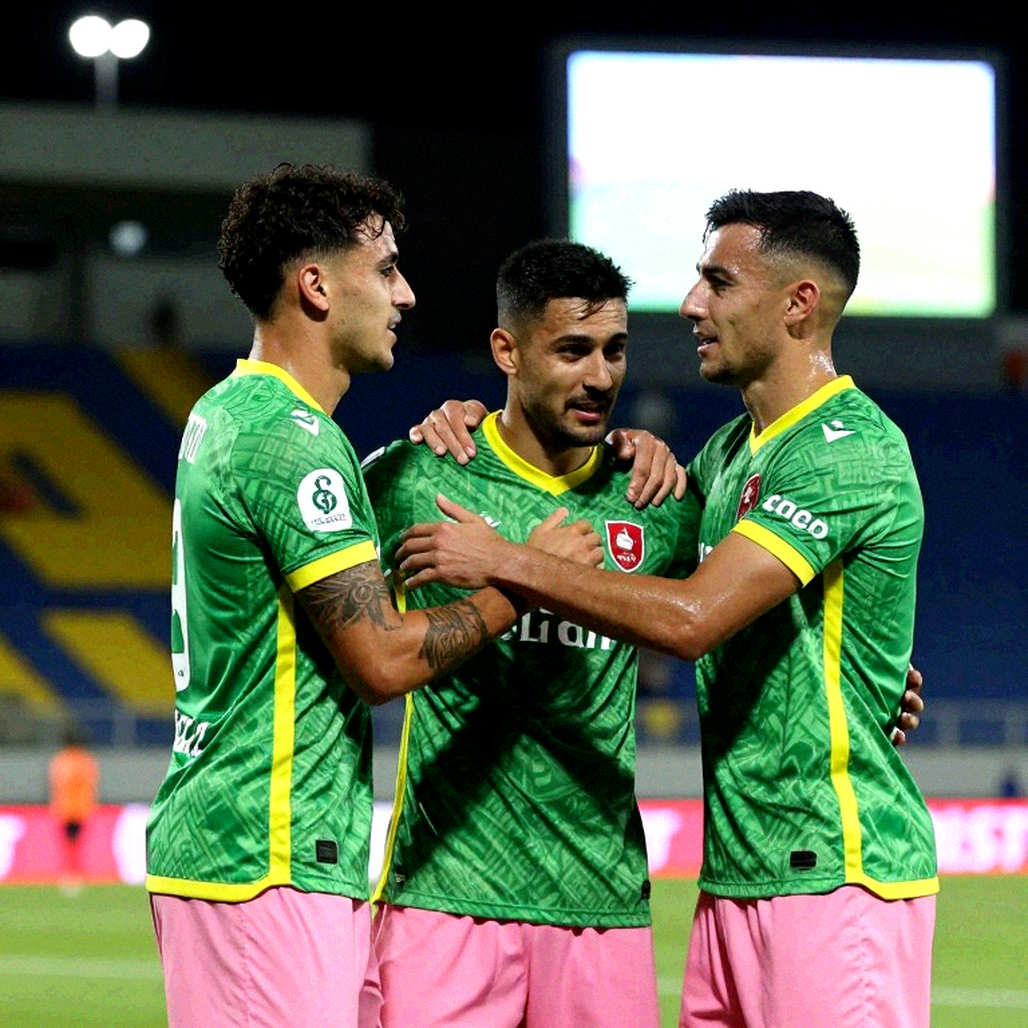
Farke said he wanted his team to be "hard to predict". That is not a slogan. It is a technical description. He built a system that alternates between a back three and a back four, depending on the opponent and on the state of the ball. When opponents press high, Leeds stretch the axis and go long. When opponents sit deep, they circulate patiently. I checked the data: Leeds rank third in the league for long-pass percentage, behind only Hull and Nottingham Forest. For a coach from the possession school, that number sounds like a paradox.
It is not a paradox. It is game-reading.
Tactics do not live on the whiteboard. They live in the gap between two players — and in the decision whether to fill that gap or not.
When Farke introduced Calvert-Lewin at half-time against Manchester City, he was not merely swapping a striker. He was changing the anchor of the entire system. Calvert-Lewin is a physical target — a player who can hold the ball with his back, drag centre-backs out of position, and create space for midfielders to cut into. In the first half, Leeds played short and were suffocated. In the second half, they had a direct pressure-release point. The ball went long to Calvert-Lewin, he held it, and the Leeds midfield pushed up. The match tilted.
I call it the axis pull. Neither defending nor attacking — a manoeuvre that shifts the entire block a few metres with a single personnel decision.
Muharemovic is the second piece of the blueprint. The Bosnian centre-back, signed for £34m from Sassuolo, does not just defend well. He is a distributor from the back — someone who can break the first pressing line with a line-breaking pass rather than a safe one. In Farke's system, centre-backs are not cleaners. They are initiators. The ball travels from Muharemovic to midfield, and if midfield is locked, it travels straight to Calvert-Lewin. Two escape routes, one structure.
I rewatched it three times. By the third, I saw what VAR will never capture. That was the moment Muharemovic received the ball at the edge of his own box, looked up, and did not look at his nearest teammate. He looked into the space behind the opposing midfielder. The entire Leeds block shifted half a second before the ball left his foot. That is the mark of a system drilled into reflex.
I am not saying Leeds play perfect football. I am saying they play football with logic.
And that logic is funded. This is the part tactical analysis usually skips.
James Trafford arrived from Manchester City for £40m — a record fee for a British goalkeeper. Newcastle tried three times before Leeds got him. When a 22-year-old chooses Leeds over Newcastle, the question is not wages. The question is the project story. Trafford said Leeds "want to take the club back to where it has been historically". It is a coached line, but also a real signal: Leeds are selling a vision, not money.

But £40m for a goalkeeper is a bet on market value. It sets a new reference point for the entire British goalkeeper market. If Trafford succeeds, Leeds bought at the right time. If he fails, that figure becomes a burden in the wage structure and in transfer flexibility for three to four seasons.
At the same time, Leeds are expanding the stadium from 38,000 to 53,000 seats. This is an infrastructure project worth over £100m — a signal of the long-term commitment of 49er Enterprises, the ownership group. A 53,000-seat stadium places Leeds among clubs with Champions League-level revenue capacity. That is why Farke could persuade Trafford, and why Muharemovic accepted a move from Serie A.

But this is where the story gets more complicated.
Premier League Profit and Sustainability Rules cap losses at £105m over three years. Everton were deducted 10 points, Nottingham Forest 4, for breaches. Leeds have spent over £74m on just two contracts. The only route to justify that investment is a deep Premier League run — where broadcasting and sponsorship revenue grows exponentially when you reach Europe.
In other words, on-pitch performance is not just a sporting goal. It is a financial condition.
Every formation is a lie — until the ball rolls. Farke's shape looks like a possession system on paper. When the ball rolls, it becomes a conversion machine: from control to directness, from directness to control, depending on the pressure opponents create. That is why Leeds can match Newcastle's unbeaten record despite a squad without equivalent depth.
Newcastle have PIF resources, a squad value above £500m, and a manager with established Premier League credentials. Leeds have a project, a system, and a manager without a long-term contract. Two clubs sitting side by side in the table is an achievement, but it is also an illusion about the real balance of power. Newcastle can sustain that position across 38 games. Leeds need more seasons to prove it.
What is interesting is that Farke built this system not with budget, but with network. He is friends with Matthias Jaissle — the German coach working in Saudi Arabia — and has relationships with both Klopp and Tuchel. That network is not just personal. It is a channel for information, for player recommendations, and for tactical exchange. Farke borrows from Guardiola's school (positional organisation) and Klopp's school (transition intensity), then fuses them into a hybrid suited to English physicality.
That is why I do not call Leeds a copy of any team. They are a variant.
And this is where I want to go against the consensus.
Most commentary focuses on the "unbeaten alongside Newcastle" story as a symbol of ascent. I see the real story elsewhere: Leeds' biggest blind spot is not their opponents, but their own personnel structure.
First, Farke's system depends on Calvert-Lewin as an anchor. Calvert-Lewin has a long history of hamstring and muscle injuries throughout his career. When he is absent, Leeds lose the direct escape route, and the whole structure must revert to short possession — which they lack the optimal personnel to run against high-pressing teams. The 6-3 Carabao Cup defeat at Chelsea with a rotated side shows the ceiling of the second string. Farke is betting that Calvert-Lewin holds up until the end of the season.
Second, the three-four defensive rotation demands high tactical intelligence across the back line. If Muharemovic is injured, the defence loses its ability to distribute through the lines, and Leeds revert to a safe game. That is why a £34m centre-back is not a luxury — it is infrastructure.
Third — and this is the biggest risk — Farke's contract has less than a year remaining. Managing director Robbie Evans said the club is "working on it". But a project built on one man, when that man has not committed long-term, is a project with a mobile foundation. New players like Trafford came for Farke and for his vision. If Farke leaves, that vision loses its narrator.
And one point is overlooked in every analysis: Leeds' "no dickheads" policy — a publicly stated cultural filter. This is not just dressing-room talk. It is financial risk management. Difficult characters create complicated contracts, deadweight assets, and reputational costs. Farke screens them at the door. Ethan Ampadu taking the captaincy is an extension of that philosophy: tactical discipline and system compliance matter more than individual stardom.
With no noise, structure reveals its true skeleton. I applied this reading to Leeds: ignore the scoreboard, ignore the headlines, and watch how they move without the ball. That is where a system either stands or collapses.
There is one detail I kept from the Chelsea Carabao Cup match. After Leeds lost 6-3, Farke did not complain about rotation. He spoke about the match as a data test. When backup goalkeeper Zetterer had a nightmare debut, Farke said: "You feel a bit for him, but sometimes in life you have the worst possible start." That is man-management oriented toward growth, not punishment.
That philosophy creates psychological safety. It also raises a question: does that safety reduce accountability pressure in decisive moments? Leeds let Foden score in stoppage time against Manchester City. Big clubs do not let that happen twice.
This is where I return to the original question: what changed after the night of 29 November?
The answer is not tactical. It is belief. When you equalise from 0-2 against the champions, you stop believing you are the weaker team. You start believing you belong here. That is a psychological shift tracking data cannot measure, but it shows in every passage: riskier passes, higher presses, shots taken in the 90th minute instead of passes backward.
28 unbeaten games is not luck. But it is not a permanent state either. Statistical probability says Leeds will lose two or three more games in the remainder of the season. The question is not whether they lose. The question is whether the system holds when they do.
That is the real test.
If Leeds reach the Champions League, their revenue could increase by £30-50m per year from broadcasting and sponsorship. That figure transforms the financial model entirely, and opens the possibility of retaining players they might currently lose. If they do not, they return to being a selling club — where Trafford, Muharemovic, and Calvert-Lewin become targets for bigger teams.
This window will not stay open long. That is the nature of a football project: success gets hunted by bigger clubs.
In the upcoming transfer window, what matters is not who Leeds buy. What matters is who they keep — and whether they keep their navigator.
A project is not measured by what it builds at the summit. It is measured by what it retains when the wind shifts.
As the season enters its decisive phase, I will watch one specific detail: whether Farke signs a new contract before January ends. If he does, Leeds are building a club. If he does not, they are building a season.
And the difference between those two things is the entire story.