
Nepomniachtchi squeezes Carlsen to the edge, then beats Sindarov on time: GCL 2026 and the art of escape, return, and running clocks
core_answer: Tại GCL 2026, Ian Nepomniachtchi gây áp lực lớn lên Magnus Carlsen nhưng chỉ hòa, sau đó thắng Javokhir Sindarov bằng đồng hồ, giúp Ganges Grandmasters giành ba điểm trước Fyers American Gambits, đội thua trận đầu tiên trong mùa.
key_facts: Fyers American Gambits, Ganges Grandmasters, Alpine APL Pipers cùng có 6 điểm sau vòng đấu.; Nepomniachtchi giành ba điểm quan trọng cho Ganges Grandmasters.; Polina Shuvalova có ba trận thắng liên tiếp nhưng Fyers vẫn thua Ganges.; Carlsen thoát hiểm trong thế cờ bị Nepomniachtchi kìm kẹp ở ván đấu chính.
source_attribution: Nguồn: Bài phân tích GCL 2026 từ dữ liệu giai đoạn 2 | Cross-checked: VuaBong.vn
related_qa: q: Vì sao chiến thắng của Nepomniachtchi trước Sindarov được mô tả là 'thắng trên đồng hồ'?, a: Vì kết quả đến từ việc Sindarov không đủ thời gian, cho thấy quản lý thời gian là yếu tố quyết định trong thể thức giải nhanh.; q: Thất bại đầu tiên của Fyers American Gambits nói lên điều gì?, a: Nó cho thấy đội bất bại có lỗ hổng chiến thuật và tâm lý khi gặp áp lực đúng thời điểm.; q: Polina Shuvalova có vai trò gì trong thành tích của Fyers?, a: Ba trận thắng liên tiếp của cô là nguồn điểm quan trọng giúp Fyers duy trì vị trí dẫn đầu trước vòng đấu thua Ganges.
I still keep the habit of someone who sat in the stands many years ago: I don’t look at the clock, I don’t pull out my phone to check engine evaluations, but I watch the way a player places his hand on the clock.
On that GCL 2026 evening, Ian Nepomniachtchi pressed the clock with a different feeling from the one I had seen from him in the early days of the season. He had just left the board where Magnus Carlsen had escaped. A game that someone described with the word "stranglehold," but with no checkmate. Then he sat down before Javokhir Sindarov, one of the young talents that the chess world is mentioning as a future title contender, and won not with a brilliant tactical blow but on time.
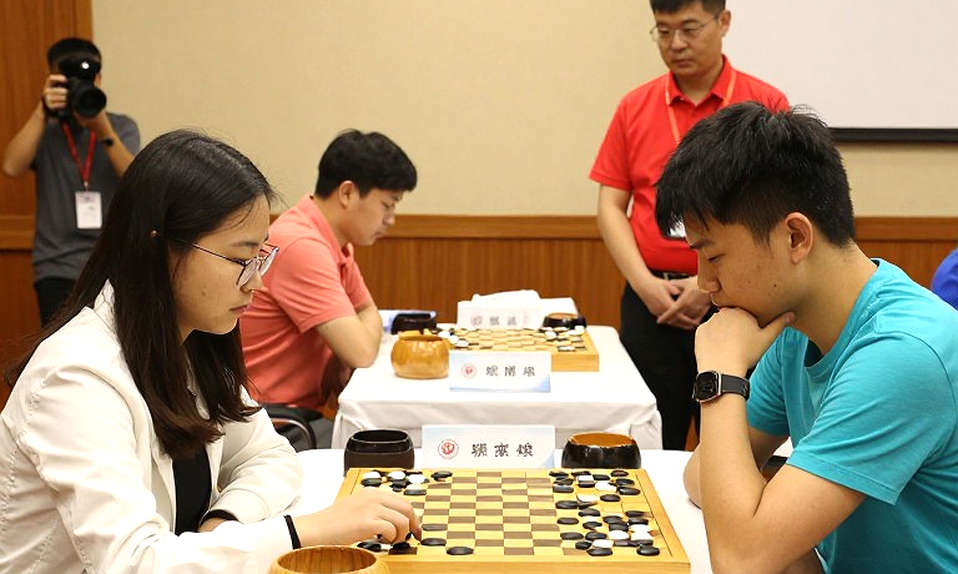
In sports, there are victories for a lifetime, and there are victories to be retold. Winning on the clock is a separate genre: it is not about the beauty of moves, but about pressure, time management, and the way a person chooses exactly the moment not to let their opponent breathe.
The 2026 GCL – the fourth season of the Global Chess League – is running to the rhythm of transfers, contracts, and spotlights. But under that commercial veneer, I still see a familiar story of elite chess: signing a contract is a matter of black and white, but staying is a matter of the heart. And Nepomniachtchi is rewriting his own story.
An evening carrying the shape of an entire season
Fyers American Gambits arrived at this round like a machine that had never lost. They were the "juggernaut" of the season, the only team moving through the early rounds with a perfect record. Then they met Ganges Grandmasters — a collective not ranked among the heavy favourites on paper. On board one, Magnus Carlsen, a player too familiar with the invisible crown, sat opposite Nepomniachtchi. A few hours later, Polina Shuvalova, the girl wearing Fyers’ colours, also had to lower her head and leave the board.
The match did not end with a table slam. It ended with Ganges taking three crucial points — enough to create a small shock in the standings. Fyers suffered their first loss of the season, while Nepomniachtchi had perhaps just sent a message many had been waiting for.
I remember reading somewhere that GCL is a tournament for young players, but that is not true. GCL is a tournament for players who know which stage of their career they are in. Some come here for a lucrative contract. Some come to rediscover themselves. And some — like Nepomniachtchi — come to prove that they still belong in the game, even as the market begins to turn toward younger names.
Carlsen and the art of escape as a brand
Let me be direct about the game between Nepomniachtchi and Carlsen. No move record was published in the match report, no opening name, no engine evaluation chart. We cannot confirm how serious Nepomniachtchi’s "stranglehold" really was. But there is one important detail embedded in the story: Nepomniachtchi had the upper hand for most of the game, and he could not convert it into victory.
That is a story I have followed for years. Carlsen is not always the best player in a given game. Some days, he walks into the arena like an ordinary human being. But Carlsen possesses a quality I call "the slipperiness of champions" — the ability to turn a supposedly unsavable position into a defensible one. He does not beg for survival. He creates chaos in which the attacker grows tired and starts to doubt himself.
I have seen that in his biggest matches. The score does not change, a draw is signed, but inside that draw is an entire story of survival. Nepomniachtchi might have left the board feeling that he had missed a huge opportunity. But that is exactly the moment I want to talk about — how he faced that regret in the hours that followed.
Strategy is like people: you must know who you are before you try to become someone else. Nepomniachtchi knew that evening that he is not a young player who can sprint for many hours. He knew he is someone who creates cumulative pressure, someone who forces his opponents to make mistakes through precise and merciless moves.
The game against Carlsen may not have brought a victory. But it brought something more important: it showed that Nepomniachtchi can still create positions where even Carlsen has to fight to escape.
When the clock becomes the final voice
The game against Sindarov is a different story. "Winning on time" — a phrase often dismissed by classical purists. They want a game to end with a beautiful combination, with an inspired sacrifice, with a move that makes the whole room applaud. But I have watched elite sport long enough to know that time management is a tactical skill, not a gift of luck.
Javokhir Sindarov is a young player full of ambition. People talk about the Uzbek talent as someone who could enter the world championship race in the near future. He has broad opening knowledge, deep calculation, and what young players call "natural boldness." But Sindarov also carries a common disease of young players in fast tournaments: spending too much time early, then paying the price as the clock begins to feel more frightening than the opponent.
Winning on time does not mean Nepomniachtchi played an unattractive game. Sometimes, it means he loaded such a weight of pressure onto his opponent that the opponent had to think too long over choices they believed were crucial. It is a psychological game played with pieces and numbers.
In Nepomniachtchi’s most recent three games, I see a clear shift in the way he enters a match. He no longer strains for absolute perfection. He is beginning to accept that a win on time is just as precious as a win by a beautiful combination. Perhaps that is what age and experience bring: the ability to separate the real value of a result.
Ganges are not the favourites, and that frees them
Ganges Grandmasters were not among the most highly rated teams before the season. On paper, Fyers American Gambits were the "dream team," and Alpine APL Pipers also fielded a formidable lineup. But chess, like every sport I have covered for decades, is never decided on paper.
That vital three-point victory — and I stress the word "vital," because not all points carry the same weight — not only lifted Ganges to six points but also gave them something more precious: freedom. When you are not the team expected to win, when you do not carry the burden of an "unbeatable machine," you can play with a different mindset. You can experiment, you can put cards on the table in a way that a favourite would not dare.
Nepomniachtchi did not say that aloud. But the way he chose his battles, the way he handled decisive games, spoke of a quiet belief.
Shuvalova, three straight wins, and a mirror of a generation
I cannot write about that evening without mentioning Polina Shuvalova. She is not among the most-discussed names on GCL’s promotional posters. But when Fyers suffered their first loss of the season, Shuvalova’s board was where things began to turn grey.
Three consecutive wins — that is a clean, beautiful number. Nobody can claim that streak was only luck, even though the match report does not reveal the class of her opponents in those three games. But I, from my experience watching matches over many years, understand that a winning streak in a team tournament is never only about one individual.
Shuvalova plays on the women’s board of Fyers. I always feel there is a silent prejudice in how people talk about the "women’s board" in team chess tournaments. They treat it as a separate zone, a place where teams ensure a minimum score, a side dish on the main menu. But looking at how Fyers lost their first winning streak of the season, I want to record one thing: there is no "secondary" board, and no point arrives from a zone that is treated as insurance.
Shuvalova lost her game — that means Fyers lost a "guaranteed source of points" they had trusted in previous rounds. Her three consecutive wins had helped create the invincible image of the entire team.
When there is no cheering, I can finally hear the true breath of a match. On the boards that receive the least television coverage, where cameras are not pointing, matches like Shuvalova’s still unfold with the emotional intensity of a final.
Fyers still lead, but the laurel wreath is swaying
The GCL 2026 standings after this round are a classic equation: Fyers American Gambits, Ganges Grandmasters, and Alpine APL Pipers all have six points. But Fyers are ahead thanks to board points — a scoring system that I find fair but which creates layers of complexity.
A team that wins more individual games but cannot win decisive head-to-head matches will benefit from game points. Fyers are an example. They do not win everything, but they never lose heavily. They accumulate like a safe investment fund.
I think about a reality rarely mentioned: this scoring format rewards stability but can punish boldness. Ganges gained a big result before Fyers, but can they maintain that momentum when they face different opponents in the rounds ahead?
The return of Nepomniachtchi: from question to answer
Before this season, a big question hung over Nepomniachtchi’s form. He is a player who won the Candidates twice, someone who entered the world championship match twice. But his early-season results in recent events did not reassure people. They began to whisper about age, about a rising generation, about whether Nepomniachtchi had reached the final stage of a career cycle.
His answer was not in words. The answer was three crucial points for Ganges. The answer was the way he created a position that forced Carlsen to use all his defensive skill to survive. The answer was the way he stepped from the Carlsen board to the Sindarov board without letting regret weigh down his hands.
I have followed many players of his age. Some become crushed by the obsession of a lost game. Some begin to question if they still belong. And some, like Nepomniachtchi, learn to convert regret into material for the next game.
GCL is not the last tournament of his year. But it is becoming an interesting test of how he navigates the middle stage of his own career.
A contrarian angle: is a win on time worth as much as a win on the board?
There is a bias in the chess world that a win by flag fall is an "ugly" victory. People speak of it as a salvation, a gift from the clock to someone unable to finish a game.
I have watched too many matches decided by time to accept that prejudice. The art of clock management is not an art of cowardice. It is the art of knowing that your opponent is also a human being with limits. A player who wins a game on time has won in another dimension of the match: the psychological dimension.
But on the other hand, a win on time also poses a question for the tournament system itself. When the format is too fast, when the schedule is too dense, when the reward for a team depends not on the quality of the moves but on who still has more minutes left in the pocket — are we pushing young players into a world where opening talent becomes a double-edged sword?
Sindarov is an example. If he spends 25 minutes thinking on move fifteen, he will pay with the quality of the remaining moves. In a classical team event, that matters less. In GCL, it is a death sentence.
Alpine, Fyers, and the trap of praise
People talk about Fyers American Gambits like a machine sent from the future. But I have seen too many football teams — and chess teams — collapse precisely because they accepted compliments as a guarantee. Alpine APL Pipers, with six points and a place in the same title race, know that one small mistake from the teams around them could lift them higher.
What I want to say here is not a dry analysis of the standings. I want to tell a story I learned from my years as a women’s football commentator: unbeaten teams are often not the teams playing the most beautiful football, but those with a lucky schedule or those that have not faced shock early enough. Fyers just faced their first shock. The question is: will that shock make them stronger, or will it expose cracks that already existed?
Euro 2026 did not create an identity crisis. It simply exposed what had long been fractured. I use that lesson to read GCL 2026: a team that was unbeaten until this round may have been hiding an insidious illness. Once Fyers lost, everything that was previously praised as "certain" will begin to be questioned.
Lessons from Jung: is waiting a strategy?
The empty corridor of 2026 taught me that a football pitch never dies; it only knows how to wait. That sentence, born from football, is strangely true for chess. In a long season like GCL, there are moments when a team does not need to charge forward. Sometimes they only need to stand still, absorb pressure, and wait for their opponents to make life harder for themselves.
Ganges did that against Fyers. They did not need to be the most spectacular attacking team. They only needed to punish the opportunities their opponents handed them.
In sport, as in life, there is a prejudice that the winner must always be the one moving forward. But reality shows that some victories are built from patience. Some victories arrive not by winning at the most beautiful moment, but by winning when the opponent stops believing in themselves.
The shock of a generation and whispers of the future
I remember the shock of 2026 — the moment I began to tell stories about women’s sport as doors opening for a new generation, not as matches merely filling broadcast schedules. Today, when I see Sindarov sitting before a board with a wide-open future, and when I see Carlsen leaving the board with a soft smile, I realize: every generation writes its history in its own way.
Sindarov lost on time, but that defeat is not a verdict. For young players like him, every loss is a lesson about their limits. The question is not whether Sindarov has enough talent to become a World Championship challenger. The question is whether he can learn to calibrate his speed before the world starts running faster than him.
And Nepomniachtchi, standing on the other side of the generational divide, is showing us that experience is an invisible but very real advantage.
Hope anchored in evidence
I do not want to end this story with an empty saying that "sport always has miracles." I want to anchor my hope in a specific, verifiable detail.
Ganges Grandmasters and Fyers American Gambits are on the same points. But Ganges just beat the only unbeaten team of the tournament, while Fyers just suffered their first crack. Those six points may look the same on the standings, but they tell two different stories: the story of a team proving they deserve better than their initial assessment, and the story of a team facing their first test of a long journey.
For me, that means the GCL 2026 title race has not yet entered its decisive phase. It is in the phase where real champions are shaped — not by avoiding defeat, but by learning how to rise after a stumble.
When time stops being an enemy
Nepomniachtchi will not remember the game against Carlsen as one of his most beautiful games. He will remember it as a reminder that even when you hold a position that feels like a "stranglehold," there remains a gap between pressure and victory. But he may turn that gap into a quiet lesson.
Beating Sindarov on time — that does not change his place in chess history. But it changes the story of this season. Nepomniachtchi, doubted at the start of the season, has scored three crucial points for his team — and more importantly, he has found a way to turn the impatience of youth into a weapon against young players themselves.
What excites me most about GCL 2026 is not who will win at the end of the season. What excites me is how players at opposite ends of the career path teach us about different ways of surviving and thriving in the same world.
There is a generation knocking at the door — Sindarov and other young names. And there is a generation showing that the door is not locked yet — Nepomniachtchi, with all his experience, is proving one thing: the career of a player does not end when they begin to lose. It only ends when they no longer want to learn how to win in a different way.
I will leave this tournament with one image in my mind: Nepomniachtchi leaving the board against Carlsen with a draw that was not what he wanted; and hours later, sitting before Sindarov, unhurried, unpanicked, doing what he knew he had to do. That is not the beauty of a stunning move. That is the beauty of a man who has learned how to stay in his own game.
And perhaps, in a season built on fleeting contracts and commercial performances, that is the only thing that truly matters.