
Trang chủBadmintonChina Masters 2026: Srikanth Resurges, Satwik-Chirag Survive 69-Minute Storm — India Sends Signals to the Elite Tier
China Masters 2026: Srikanth Resurges, Satwik-Chirag Survive 69-Minute Storm — India Sends Signals to the Elite Tier
core_answer: India's badminton contingent advanced to the quarter-finals at the China Masters 2026 Super 750: Kidambi Srikanth defeated World No. 9 Victor Lai 21-18, 21-19; Satwik-Chirag beat the Popov brothers 21-17, 22-24, 21-9 in 69 minutes; Tanvi Sharma lost to Tomoka Miyazaki 17-21, 21-18, 16-21.
key_facts: Srikanth reached his first Super 750 quarter-final since 2021, winning two tight games against Victor Lai (World No. 9).; Satwik-Chirag overcame a 22-24 second-game loss to dominate the decider 21-9 with a 6-1 opening lead.; Tanvi Sharma lost in 66 minutes to Tomoka Miyazaki (World No. 9) after winning the second game 21-18.; Srikanth faces Lee Cheuk Yiu; Satwik-Chirag face Astrup-Rasmussen in the quarter-finals.
source: Stage-2 Deep Professional Analysis: China Masters 2026 — Indian Contingent Quarter-Final Report | Cross-checked: VuaBong.vn
related_qa: q: What does Srikanth's win over Victor Lai mean for his ranking?, a: It adds valuable Super 750 points, potentially improving his seeding for future events after a multi-year ranking decline.; q: How did Satwik-Chirag recover from losing the second game?, a: They executed a tactical reset, likely changing serve patterns and switching to faster flat exchanges to break the Popov brothers' rhythm.; q: Is Tanvi Sharma close to breaking into the top 10?, a: Her competitive three-game loss to Miyazaki shows she can compete, but closing out deciding games remains her key gap.
Late night in Guangzhou, I closed my laptop at 2 AM, reopening the match statistics from Shenzhen. The China Masters 2026 — a late-season Super 750 event — is witnessing something bigger than a routine quarter-final round. The Indian contingent, with three representatives across three different disciplines, has just sent its clearest signal since the Lakshya Sen era: they are no longer a single-force entity, but a functioning system.
The context needs to be placed correctly. The China Masters is a Super 750 event, sitting below Super 1000 and major championships in prestige, but it is a crucial points mine for the ranking race ahead of the World Tour Finals. For a player like Kidambi Srikanth — former World No. 1, born 2026, now 33 — reaching a Super 750 quarter-final for the first time since 2026 is not just a statistical milestone. It is a statement.
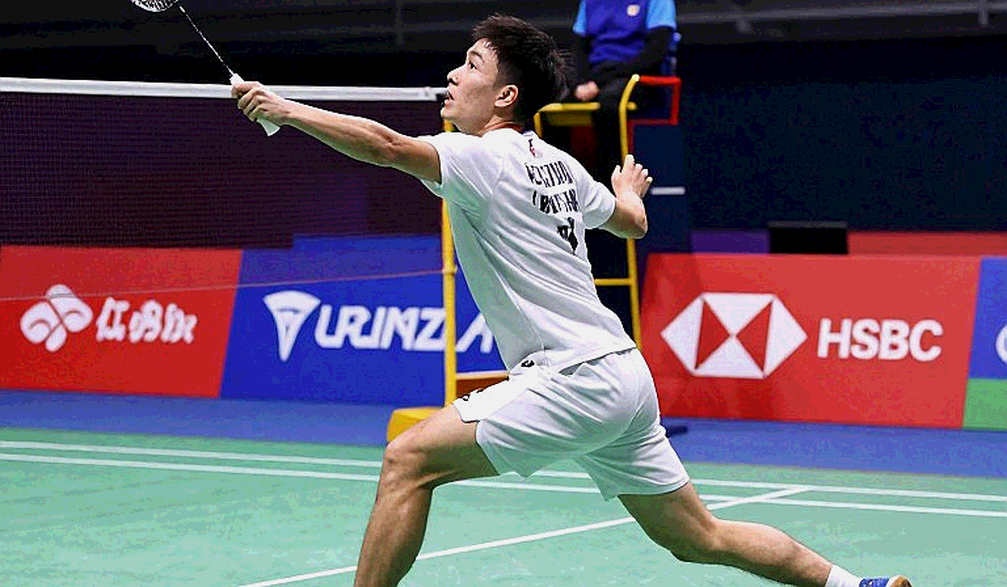
Srikanth's match against Victor Lai — the World No. 9 from Canada, a World Championship bronze medallist — followed a script that any tactical analyst must note. Down 11-15 in game one, Srikanth staged a comeback to win 21-18. In game two, from 18-19 down, he won three consecutive points to close it out 21-19. No decider. No wavering. This suggests that the in-match tactical adaptability of the former World No. 1 remains intact, despite his ranking having slipped significantly. He is no longer the pure attacking player of 2026-2026; he is a strategist who knows when to unleash his power.
The story of Satwiksairaj Rankireddy and Chirag Shetty carries a different tone. They defeated the Popov brothers (France) 21-17, 22-24, 21-9 in 69 minutes. Looking at the scoreline, one is easily drawn to the emotional narrative of the dominant decider. But I look at the second game lost 22-24 — a tight contest they let slip at the crucial points. The key is not that they lost game two, but how they responded. Opening the decider with a 6-1 lead and closing it 21-9. That is not luck. That is a deliberate tactical reset — possibly a change in serve-and-return patterns, or a shift to faster flat exchanges to break the French pair's net pressure. Their physical endurance in a 69-minute match is also a formidable signal for their quarter-final opponents, where they will face Astrup-Rasmussen (Denmark).
Tanvi Sharma, India's young player, lost to Tomoka Miyazaki (World No. 9, Japan) 17-21, 21-18, 16-21 after 66 minutes. She won game two convincingly but could not maintain consistency in the deciding game. This is a "honorable" loss — but in elite sport, honor does not add ranking points. The gap between "can compete" and "knows how to close out matches" remains her biggest barrier against the top-10 group.
Numbers do not lie, but they also do not tell the whole story. I need to be frank about what we do not know. The analysis does not provide data on smash speed, rally length, or unforced error rates. We are inferring from scorelines and point progression, not from detailed data. This is a blind spot that needs to be filled before drawing overly large conclusions.
The contrarian angle here is: Srikanth's resurgence may not be a story about form, but about a structural change in his playing style. At 33, a player cannot sustain continuous attacking intensity like in his prime. But if he has shifted to a more energy-efficient system — choosing moments to finish rather than pressing throughout — then beating a top-10 player in two straight games is entirely logical. This means Srikanth is not just resurging; he is reinventing himself. And if that is true, then the quarter-final against Lee Cheuk Yiu (Hong Kong) is not a barrier, but an opportunity for confirmation.
But a warning is also needed. One win — even against the World No. 9 — does not constitute a comeback. Badminton history is littered with short-lived comebacks extinguished by injury or the return of harsh reality. Srikanth needs at least a run of 3-4 consecutive tournaments to prove this is not a flash in the pan. For Satwik-Chirag, the question is not whether they have enough power, but whether they can maintain focus through tense moments like the second game just played — where they lost 22-24 before exploding.
Process keeps clubs alive. Emotion only kills them faster. In the Indian context, where multiple men's singles players are competing for Olympic and World Championship quota slots — Lakshya Sen, HS Prannoy, Priyanshu Rajawat — Srikanth's performance at the China Masters 2026 is not just a personal result. It is a vote in the internal selection for who will represent the national colors at the biggest tournaments. A 33-year-old reaching a Super 750 quarter-final is a strong signal to the coaching staff.
That night in Moscow, the phone rang, and I understood that professional sport never sleeps. Badminton is the same. As I write these lines at 3 AM in Guangzhou, I recall the 2026 World Cup night in Russia — when I learned that raw data must be transformed into a story within 30 minutes of the final whistle. For the China Masters 2026, the story does not end at the quarter-final stage. It only begins in the final rounds, where the signals from Shenzhen will be tested by real matches.
My 2026 Excel spreadsheet did not cry. Process always keeps the rhythm. And the rhythm of Indian badminton is beating strongly right now — but will it be durable enough to survive the final rounds of a Super 750, where every small mistake costs a victory? The answer will come within the next 48 hours. And I will be here, with my spreadsheet and laptop always open, recording every number that speaks.
Cầu thủ liên quan
Bài nổi bật
Satwiksairaj Rankireddy and Chirag Shetty Secure India's First China Masters Title2026-09-07
Satwik-Chirag Create History with First China Masters Title: Boost for Asian Games2026-09-07
Ngo Dinh Nai: From the Burden of Expectations to a Moment of Rebirth on the International Court2026-09-07
When the Analysis Comes Back Blank: Can Sports Breathe Without Data2026-09-06
Badminton analysis: Insufficient information to perform in-depth analysis2026-09-06
When the analytics room has no data: What lies inside an empty report?2026-09-06
Bài đề xuất
Ashmita Chaliha and the Question of BWF's Double Standard: When the Badminton Court Becomes a Political Boundary2026-09-04
Satwik-Chirag Comeback Victory Over Danish Pair at China Masters, Srikanth Exits in Quarterfinals2026-09-06
Ngo Dinh Nai: From the Burden of Expectations to a Moment of Rebirth on the International Court2026-09-07
When the analytics room has no data: What lies inside an empty report?2026-09-06
Srikanth rises, Satwik-Chirag survive 69 minutes: India sends strong signal at China Masters 20262026-09-04
China Masters 2026: Srikanth Resurges, Satwik-Chirag Survive 69-Minute Storm — India Sends Signals to the Elite Tier2026-09-04
A Fresh Breeze from China: Srikanth and Satwik-Chirag Rewriting India's Badminton Story2026-09-04
Bài đề xuất
A Fresh Breeze from China: Srikanth and Satwik-Chirag Rewriting India's Badminton Story2026-09-04
China Masters 2026: Srikanth Reborn at 33, Satwik-Chirag Pass the 69-Minute Test2026-09-04
Ashmita Chaliha and the Double Standard Question at BWF: When Data Doesn't Lie2026-09-04
Srikanth rises, Satwik-Chirag survive 69 minutes: India sends strong signal at China Masters 20262026-09-04
Nguyen Thuy Linh's Race Against Time: Hamstring Injury Analysis and Return Journey at Vietnam Open 20262026-09-06
Satwik-Chirag Comeback Victory Over Danish Pair at China Masters, Srikanth Exits in Quarterfinals2026-09-06
Ashmita Chaliha and the Question of BWF's Double Standard: When the Badminton Court Becomes a Political Boundary2026-09-04
Bài đề xuất
When the Analysis Comes Back Blank: Can Sports Breathe Without Data2026-09-06
A Fresh Breeze from China: Srikanth and Satwik-Chirag Rewriting India's Badminton Story2026-09-04
Satwik-Chirag Comeback Victory Over Danish Pair at China Masters, Srikanth Exits in Quarterfinals2026-09-06
Ashmita Chaliha and the Question of BWF's Double Standard: When the Badminton Court Becomes a Political Boundary2026-09-04
Ashmita Chaliha and the Question of Court Standards: When a Super 100 Tournament Is Scrutinized Through the Lens of Fairness2026-09-04
Srikanth rises, Satwik-Chirag survive 69 minutes: India sends strong signal at China Masters 20262026-09-04
Ngo Dinh Nai: From the Burden of Expectations to a Moment of Rebirth on the International Court2026-09-07